
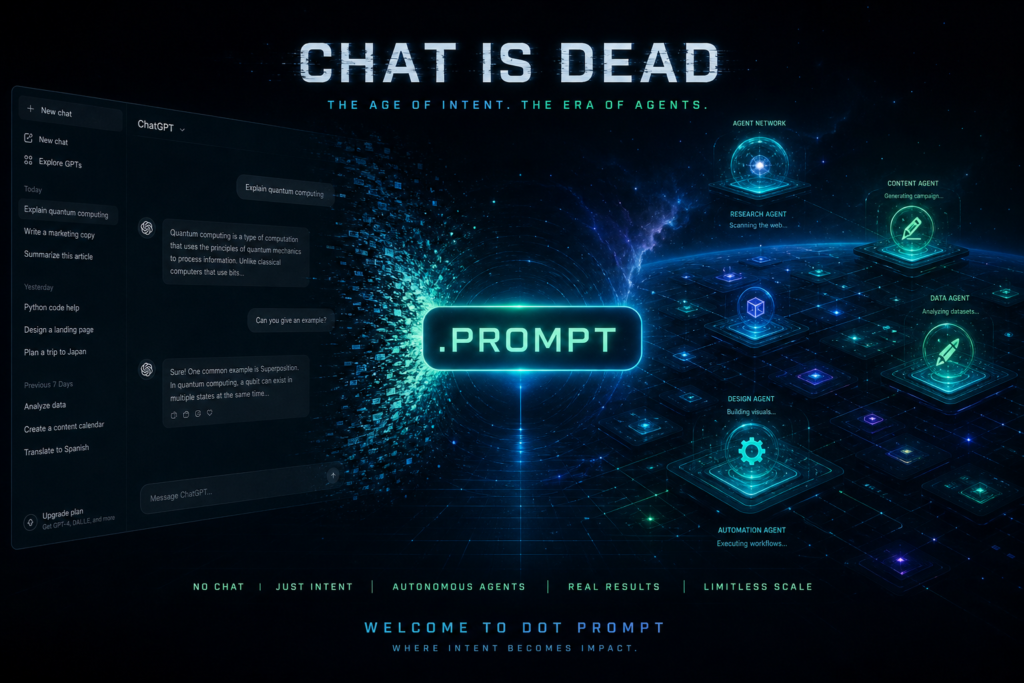
The chat window that changed everything is about to disappear.
OpenAI CEO Sam Altman declared "chat is dead" this week, signaling the most radical transformation of ChatGPT since its viral launch in late 2022. According to reports from the Financial Times and Bloomberg on June 6-7, 2026, the company is rebuilding its flagship product into a full-scale "superapp", a platform bundling coding tools, autonomous AI agents, and a third-party app ecosystem ahead of its highly anticipated IPO.
This is not a product update. This is a category pivot.
From Conversational Interface to Operating System
ChatGPT started as a text box where you asked questions and got answers. The new vision is fundamentally different: an integrated environment where AI agents execute tasks, developers build and deploy tools, and businesses orchestrate workflows, all within a single platform.
The pieces are already in place. Codex, OpenAI’s coding agent, has been operating as a semi-autonomous developer that can write, test, and ship code with minimal human oversight. The new superapp architecture positions Codex not as a feature but as a core pillar alongside agent capabilities and an app marketplace that could rival Apple’s App Store model for the AI era.
The Financial Times reported that this overhaul represents OpenAI’s strategy to transition from a consumer chatbot into an enterprise platform, a necessary evolution as the company races toward a public offering that could value it in the trillions.
Why This Matters Beyond OpenAI
The competitive landscape explains the urgency. Anthropic’s Claude has been steadily gaining enterprise traction with Claude Code, its own agentic coding environment. Google’s Gemini is embedding deeper into Workspace. The standalone chat interface that once felt revolutionary is now table stakes.
OpenAI’s response is to stop competing on conversation quality and start competing on platform depth. The superapp model transforms ChatGPT from a tool you use into an environment you build on.
For the AI industry, this signals three things:
1. The agent era is arriving faster than expected. When the world’s most valuable AI company declares chat dead, it is betting that autonomous task execution will define the next generation of AI products. The prompt engineers who have been building complex chains and workflows are not being replaced, they are being vindicated as the architects of agent behavior.
2. Platform identity is about to matter enormously. As OpenAI opens its ecosystem to third-party developers, the competition shifts from "whose model is best" to "whose platform attracts the most builders." This is the same dynamic that made iOS and Android dominant, not superior technology, but superior ecosystem gravity.
3. Digital identity becomes the critical infrastructure layer. When thousands of AI models, agents, and tools are operating across a single platform, the question of "who is this agent" and "what can it do" becomes existential. Authentication, reputation, and namespace control are not edge cases anymore. They are the foundation everything else is built on.
What Prompt Engineers and Developers Should Watch
If you have been building in the prompt engineering space, this pivot validates the complexity of what you do. Prompt engineering was never about clever text inputs, it was about designing the behavioral specifications for AI systems. As those systems evolve from reactive chatbots to proactive agents, the skill set becomes more valuable, not less.
For developers evaluating where to build, the superapp pivot creates a decision point. Building on ChatGPT’s platform means access to hundreds of millions of users but dependency on OpenAI’s ecosystem rules. Building independent tools means more control but less distribution. The history of platform shifts suggests that early movers on the new architecture tend to capture disproportionate value.
For businesses, the message is clearer: the AI tools you adopted last year were conversational interfaces. The AI tools you will need next year are autonomous systems. Planning for that transition now, in your workflows, your security posture, and your digital infrastructure, is not optional.
The Identity Layer Nobody Is Talking About
Here is the part most analysis will miss.
As AI agents proliferate, each with their own capabilities, permissions, and operational scope, the ability to establish verified digital identity becomes critical infrastructure. An AI agent that can write code, execute transactions, and interact with other agents needs a namespace. It needs a way to be identified, trusted, and located.
This is exactly why the .PROMPT top-level domain exists.
A .PROMPT domain provides the definitive digital identity for the AI era. Whether you are a prompt engineer building agent frameworks, a developer deploying tools on the new superapp platforms, or a business whose AI models need to be discoverable and verifiable, a .PROMPT domain is the standard that signals you are native to this industry.
Think of it as the equivalent of a.com domain during the internet’s platform era, except built specifically for the infrastructure that AI is creating.
As OpenAI, Anthropic, and others transform from chat companies into platform companies, the businesses and builders who establish their identity early will have an advantage that compounds. The namespace is finite. The industry is not.
The Bottom Line
OpenAI killed chat because the future is bigger than conversations. It is building an operating system for AI, and every major player is following.
For those building in this space, the question is not whether to adapt. It is whether your digital identity is ready for what comes next.
Secure your .PROMPT domain at promptdomains.ai.


Leave a Reply