
The most valuable resource in AI isn’t compute. It’s not capital, and it’s not talent.
It’s real-world data: how people actually speak, move, react, and live. The kind of data that doesn’t exist on the open web. The kind that has been, until now, almost impossible to source at scale.
Today, that changed.
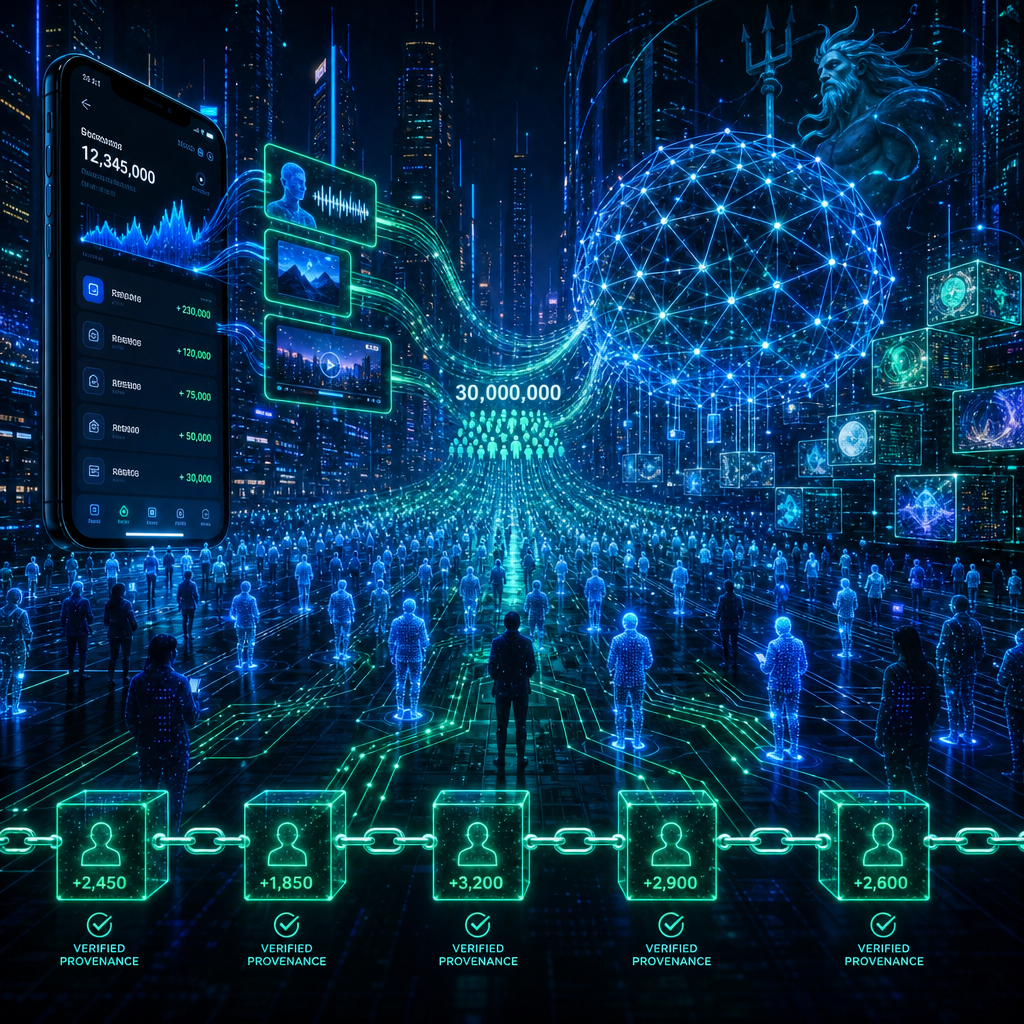
Toss, South Korea’s dominant mobile finance platform with 30 million users, has partnered with Poseidon, the a16z-backed data infrastructure company, to launch the largest real-world AI data contribution system ever built. It’s called Numo. And it’s live inside the Toss app right now.
This isn’t a pilot. It’s not a whitepaper. Thirty million people just gained the ability to contribute voice, image, and video data to train the next generation of AI models, and get paid for every piece they provide.
Let’s break down why this matters, what was actually built, and what it signals for the future of AI.
The End of Free Data
For the last decade, AI development ran on a simple assumption: the internet is free fuel. Scrape everything. Index it. Train on it. Repeat.
That model is running out of road.
Frontier AI companies have already scraped the public web at near-total coverage. Every blog post, forum thread, Wikipedia article, and public image has been ingested multiple times. The marginal value of another pass over public data is approaching zero.
But the next leap in AI capability doesn’t come from more text on the internet. It comes from real-world human data: the cadence of natural speech, the nuance of facial expressions, the way hands move in a kitchen, the emotional texture of a conversation between friends.
That data has been locked behind two problems:
- Access. There has been no scalable system to gather it from real people in real environments.
- Trust. Without verifiable provenance, AI labs can’t confirm where data came from, whether it was ethically sourced, or whether it’s reliable.
Toss and Poseidon just solved both. And they did it with an architecture that makes contribution frictionless for users and verification seamless for buyers.
What Toss and Poseidon Actually Built
The mechanics matter here, because this isn’t another "share your data" gimmick with a vague promise of future rewards.
Numo is Poseidon’s contributor application, now embedded directly inside the Toss app. For Toss’s 30 million Korean users, contributing data is as simple as opening a feature they already use daily.
Here’s how it works:
- Users contribute voice, image, and video data through the Numo interface inside Toss. Each contribution is structured and tagged for specific AI training use cases.
- Contributors are paid directly, with compensation tied to the type and volume of data they provide. No vague token promises. No "we’ll figure it out later." Real payments for real contributions.
- Every contribution is registered on the DATA network, Poseidon’s provenance layer, with a verifiable audit trail via Trace. Trace is a public audit system that lets anyone, including AI labs purchasing datasets, verify exactly where each piece of data came from.
- The DATA Foundation launched this week from the rebrand of Story, establishing the governance and infrastructure layer for this new data economy.
Think about what that means at scale. 30 million people contributing structured, provenance-verified data. Every voice sample traced. Every image authenticated. Every video contribution logged with an immutable record.
This is the first time a Web3 data marketplace has reached this volume with real, verified human participation.
Why This Is a Web3 Watershed
The crypto space has spent years talking about data ownership. Most of it has been theoretical. Whitepapers, token models, governance frameworks. Very little actual data moving through actual systems to train actual models.
This is different. Here’s why.
The provenance problem is solved. In traditional data brokerage, an AI lab buys a dataset and takes the seller’s word for it. Where did this data come from? How was it collected? Is it representative? Nobody really knows.
The DATA network’s Trace audit layer changes the equation entirely. Every contribution has a cryptographically verifiable origin story. An AI lab purchasing a dataset through Poseidon can trace each data point back to its source, confirm it was contributed willingly, and verify the contributor was compensated.
The incentive alignment is real. Toss users aren’t donating data. They’re earning income from it. And because the provenance is verified, the data is worth more to buyers. Higher provenance means higher quality. Higher quality means higher prices. Higher prices mean better compensation for contributors.
That’s not a theoretical flywheel. It’s a working system with 30 million potential participants on day one.
The compliance layer is built in. As global AI regulation tightens, proving data provenance isn’t optional. It’s becoming a legal requirement. The Trace system provides exactly the audit infrastructure regulators and enterprise buyers are going to demand.
This is the moment Web3 data infrastructure stopped being a concept and started being a supply chain.
What This Means for the AI and Domain Ecosystem
Here’s where this gets personal for everyone building in AI.
The Toss-Poseidon partnership isn’t just about data. It’s about identity, reputation, and infrastructure. When 30 million users become active participants in the AI data economy, every entity touching that ecosystem needs a verifiable digital identity.
AI models need to be traceable. Data pipelines need to be auditable. Tools and platforms need trusted, recognizable digital homes that signal what they are and who operates them.
This is exactly the gap .PROMPT domains were built to fill.
As the AI data economy matures, the ability to establish digital identity for AI becomes a competitive advantage, not a nice-to-have. An AI lab sourcing verified training data needs a domain that signals its focus and credibility. A prompt engineer building tools for the data economy needs a professional home that the ecosystem recognizes instantly. A data contributor platform needs a namespace that communicates trust.
The .PROMPT top-level domain provides that infrastructure. It’s the digital identity for AI layer that makes the ecosystem navigable, trustworthy, and professional.
And with the launch of today’s partnership, the ecosystem just got dramatically larger.
The Bigger Picture
Let’s zoom out.
Toss and Poseidon didn’t just launch a feature. They established a template for how real-world AI training data gets sourced at consumer scale with full data provenance blockchain verification.
That template will be replicated. Other fintech platforms, social networks, and consumer apps will look at what happened in Korea today and ask: why aren’t we doing this?
The question for builders, engineers, and AI companies isn’t whether this model works. It’s whether you’re positioned for the ecosystem that’s forming around it.
The AI data economy is no longer a future concept. It’s an active market with verified supply, cryptographically provenance-checked data, and a contributor base of 30 million users.
If you’re building in this space, your digital identity matters more than ever.
Secure Your Place in the AI Data Economy
The AI data economy is being built in real time. Models need better data. Contributors deserve fair compensation. And every entity in the ecosystem needs a trusted, verifiable digital identity.
A .PROMPT domain is the definitive digital home for AI models, tools, and prompt engineers. It signals exactly what you do. It tells the ecosystem you’re serious. And it gives you a namespace built for the world that’s coming.
Secure your .PROMPT domain now at promptdomains.ai.


Leave a Reply