

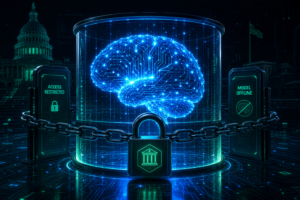
On April 28, 2026, a quiet but monumental shift took place in the federal government’s relationship with artificial intelligence. Reuters reported that the White House is drafting guidance that would allow federal agencies to bypass the Pentagon’s supply chain risk designation on Anthropic — effectively clearing the way for the government to deploy frontier AI models like Claude and Claude Mythos across civilian operations.
This is not a minor policy adjustment. It is a structural acknowledgment that the most powerful institutions on earth have passed a tipping point: AI is no longer optional infrastructure.
From Blacklist to Blueprint
The Pentagon labeled Anthropic a supply chain risk earlier this year — a designation that effectively blacklisted the company from federal contracts. But the operational reality of 2026 has forced a recalculation. According to Nextgov/FCW, the White House is now crafting specific guidance to “permit federal Anthropic use,” signaling that national security interests now depend on the very technology they previously blocked.
The move aligns with a broader pattern: the NSA’s earlier decision to bypass Pentagon blacklists to deploy the Mythos model for intelligence operations, and the trillion-dollar secondary market valuation surge that confirmed Anthropic as the infrastructure layer of choice for institutional AI.
The Trust Problem No One Is Solving
Here is the catch. As AI models become embedded in federal finance, defense logistics, and civilian infrastructure, a fundamental question goes unanswered: who verifies the output?
When a Claude-powered agent processes a federal contract, executes a supply chain decision, or generates a compliance report — how do we know it is authentic? How do we know it has not been tampered with? How do we prove, in a legally admissible way, that the output came from a specific model and was not altered in transit?
The government is solving the access problem. But the verification problem is wide open.
The .prompt Thesis
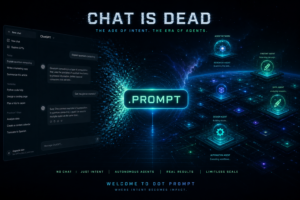
This is the exact gap that .prompt exists to close. As federal agencies move from experimentation to production deployment of frontier AI, the need for decentralized, on-chain verification of AI-generated content becomes not just useful — it becomes critical infrastructure.
Whether you are a government contractor verifying an AI-generated report, a developer proving your agent’s output is authentic, or a business ensuring compliance with emerging AI auditing standards — the solution is the same: a verified, immutable record of AI interaction that cannot be forged, altered, or disputed.
The White House just did something unprecedented. It chose utility over bureaucracy. The next move is choosing trust over ambiguity.
Start your free trial at .prompt today.
Sources: Reuters (April 28, 2026), Nextgov/FCW, Decrypt
Leave a Reply