
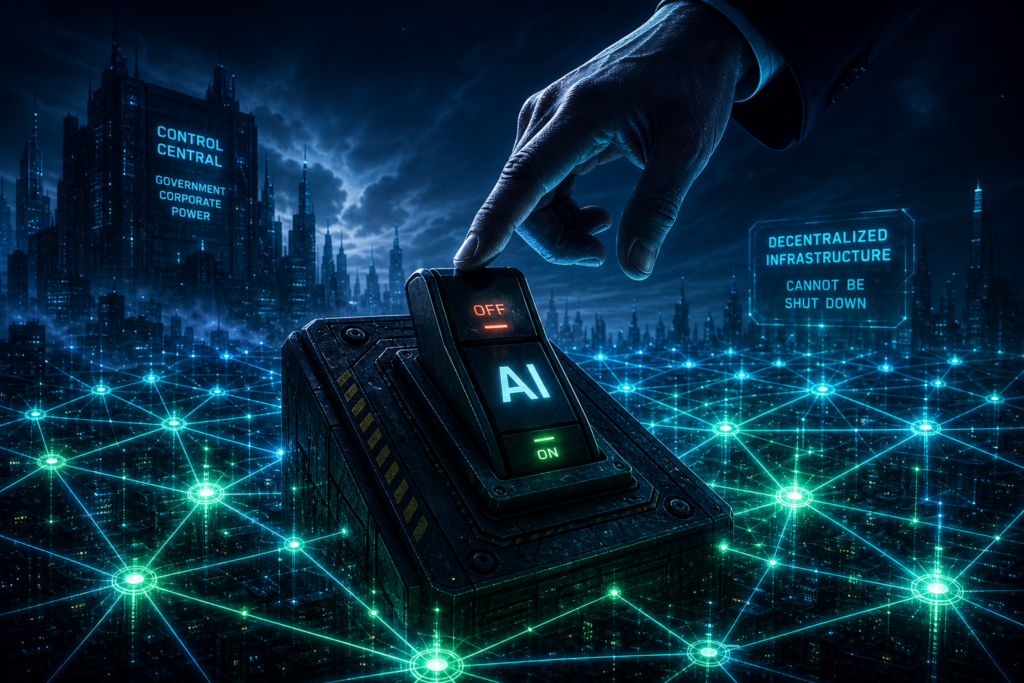
On June 12, 2026, the most advanced AI models ever built were turned off for most of the world.
That afternoon, Anthropic confirmed it was complying with a direct order from the US Commerce Department. The directive: suspend all access to Fable 5 and Mythos 5 for foreign nationals. Not a regional restriction. Not a phased rollout pause. A full shutdown, effective immediately.
The trigger was a jailbreak vulnerability that surfaced within hours of release. Reuters and Bloomberg both reported the finding. The Commerce Department cited national security concerns. And Anthropic flipped the switch.
Forbes reported that even Anthropic’s own foreign employees lost access to the models they helped build. Politico confirmed the directive was tied to export control enforcement, not a request. It was an order.
Anthropic complied. But it did not go quietly.
The company published a statement exceeding 700 words, expressing “significant concern” about the precedent. The core argument: shutting down access entirely, rather than patching the vulnerability or applying targeted restrictions, treats a technical problem as a geopolitical one. And it does so in a way that affects researchers, developers, and businesses across every continent.
This is not a story about one company and one government. This is a story about the architecture of AI access itself.
The Single Point of Failure Problem
Here is the uncomfortable truth the AI industry has been avoiding: every major AI model today runs through centralized infrastructure controlled by a single entity. That entity is subject to the laws of a single country.
When the US Commerce Department issued the export control directive, Anthropic had no meaningful alternative. The models live on Anthropic’s servers. The API runs through Anthropic’s infrastructure. The terms of access are defined by Anthropic’s policies, which are shaped by US regulation.
There is no decentralized fallback. There is no community-maintained version running on independent infrastructure. There is no “self-sovereign” option for developers who need Mythos 5 for their work.
The result: developers in Berlin, Bangalore, Buenos Aires, and dozens of other cities lost access to the most capable AI systems in existence, overnight, because of a regulatory decision made in Washington.
Anthropic’s own employees were not exempt.
Why “Just Use Another Model” Misses the Point
The standard response to this kind of disruption is to suggest alternatives. Use a different model. Switch providers. Wait for open-source equivalents.
This misses the structural problem entirely.
Fable 5 and Mythos 5 represented a generational leap in reasoning, code generation, and multi-step problem-solving. No open-source model comes close. No alternative API provides the same capability. Telling researchers to downgrade is not a solution; it is an admission that the entire AI ecosystem is built on a foundation that can be revoked at any time.
The deeper issue is not about Anthropic. It is about any entity, any government, any single point of control that can determine who gets to build, who gets to learn, and who gets to compete.
This is the risk that decentralization was designed to address. Not as ideology. As infrastructure.
What Decentralization Actually Means Here
Web3 was built on a core principle: your access to digital tools and identity should not depend on the decisions of a single gatekeeper. Self-sovereign identity. Decentralized infrastructure. Community-governed protocols.
These are not abstract concepts. They are engineering responses to exactly the kind of event we just witnessed.
When your AI model access, your development tools, your digital identity, or your professional presence lives entirely on infrastructure controlled by one company in one jurisdiction, you are one directive away from losing everything.
Decentralized identity means your reputation, your work, your professional presence exists on infrastructure no single government or corporation can revoke. It means you own your corner of the internet, not as a tenant, but as a sovereign operator.
The Real Wake-Up Call
The Anthropic shutdown is not the last time this will happen. It is the first time it has happened at this scale, with this level of capability at stake. More capable models are coming. More regulatory pressure is coming. More shutdowns are coming.
The question is not whether you will be affected. The question is whether you will have built the infrastructure to survive it.
This is why .prompt domains exist. Your digital identity shouldn’t depend on who holds the switch.
A .prompt domain gives you a permanent, sovereign presence in the AI ecosystem. It signals your expertise. It anchors your work to infrastructure you control, not infrastructure controlled by a single company subject to a single government’s directives.
The switch got flipped once. It will happen again. The only question is whether you will be ready.
Secure your .prompt domain at promptdomains.ai.

Leave a Reply