
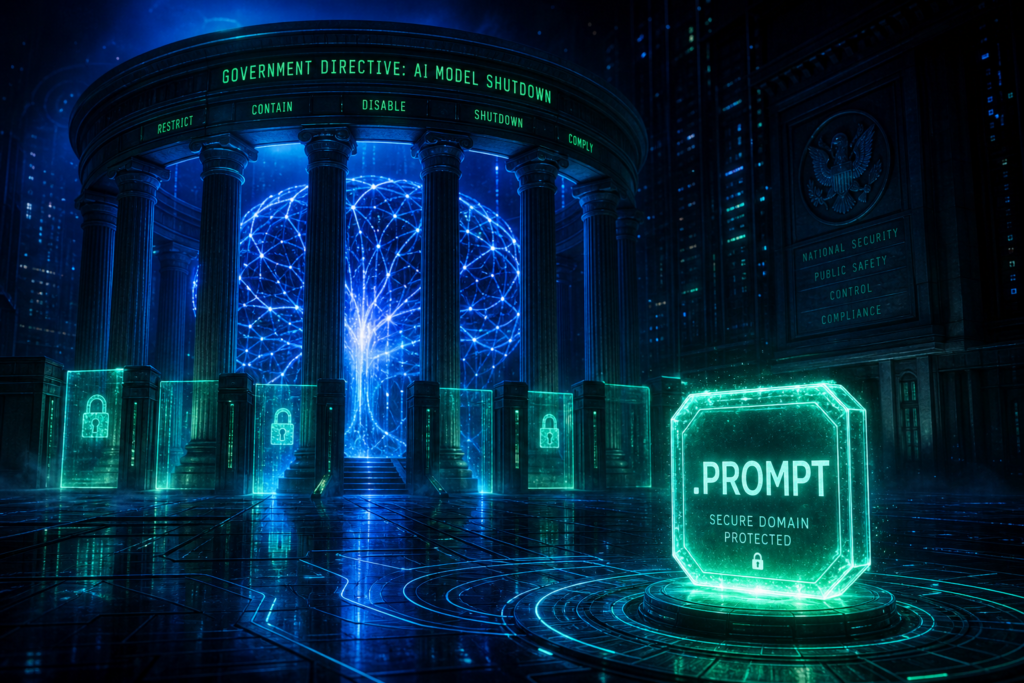
On June 12, 2026, the U.S. government did something it had never done before. It ordered Anthropic to shut down access to two of the most advanced AI models ever publicly released: Fable 5 and Mythos 5.
Anthropic complied. The models went dark for foreign nationals. Then, to simplify enforcement, Anthropic disabled them globally (CNBC, 2026).
The order cited "national security authorities." No further details were provided. This was not a policy debate or a regulatory hearing. It was a single directive that erased access to frontier AI infrastructure in real time.
For AI developers, prompt engineers, and researchers, this is not a distant political event. It is a structural lesson about where digital identity actually lives and who controls it.
What Just Happened and Why It Matters
The U.S. government leveraged export control authorities to restrict access to AI models deemed sensitive to national security. Anthropic, the company behind the models, had no choice but to comply. The models were pulled from availability for anyone outside the United States, and then temporarily for everyone.
This is the first time a frontier AI model has been removed from public access by direct government order after its initial release. It establishes a clear precedent: the operational life of an AI model is now subject to geopolitical forces beyond the developer’s control.
The decision follows a broader trend of tightening AI export controls and is entangled in Anthropic’s ongoing legal dispute with the Trump administration over its placement on a Department of Defense blacklist.
The Sovereignty Problem for AI Builders
If you are building on top of a model’s API, your product’s functionality is directly tied to that model’s continued availability. An export order, a compliance decision, or a corporate policy change can sever that connection without warning.
This creates a fundamental vulnerability. Your application, your user experience, and your core value proposition may be entirely dependent on infrastructure you do not control.
The same principle applies to your digital identity. If your AI brand, your prompt engineering portfolio, or your developer tools live on a generic domain like a .com, .io, or even a trendy .ai, you are renting space in a neighborhood you do not own. The address itself is governed by registrars and policies that are not built for the specific needs of the AI ecosystem.
When models get shut down and platforms get restricted, the assets you build on top of them become fragile. Your domain name, however, is the one piece of your digital presence you can fully control. It is the stable address that persists when APIs change, when platforms pivot, and when geopolitical events intervene.
.PROMPT: A Domain Built for the AI Ecosystem
This is where the .PROMPT top-level domain changes the equation. A .PROMPT domain is not just a URL; it is a declaration of digital sovereignty for the AI community.
A domain ending in .PROMPT signals immediately that you are part of the AI ecosystem. It tells users, collaborators, and the market that your work, your tools, and your brand are native to this space. It is a trusted, recognizable namespace built specifically for AI models, tools, and prompt engineers.
Owning your .PROMPT domain means you control your primary digital identity. You are not dependent on a generic TLD that serves every industry equally. You are not vulnerable to the shifting policies of a platform or the geopolitical decisions that can affect model availability. You have a permanent, sovereign home for your AI brand.
As the AI industry faces increasing regulatory scrutiny and operational uncertainty, the question is no longer just "which model should I use?" It is "where does my AI identity actually live?"
The answer should be somewhere you own.
Claim your .PROMPT domain at promptdomains.ai and secure your AI identity for the future.
Leave a Reply