Today, the United States government decided which corporations are worthy of touching the most powerful artificial intelligence models ever built. Not with a public standard. Not through a transparent process. With a list.
This is the new era of AI gatekeeping, and it raises a question every developer, founder, and researcher needs to answer: who decides who gets to build with frontier AI?
Two Models, One Government Hand
The events of June 26, 2026, mark a turning point.
Anthropic, after having access to its Claude Mythos 5 model suspended for two weeks over national security risks, received clearance to redeploy the system to more than 100 trusted U.S. organizations. These are not small labs or indie hackers. They are Fortune 500 companies and large institutions vetted under a framework that Commerce Secretary Lutnick’s letter confirms made "significant progress" on safeguards.
On the same day, OpenAI deferred the full public launch of GPT-5.6 at the government’s request. Sam Altman stated plainly: "I just don’t like the idea of the government picking the customers."
Two of the most influential AI companies on the planet, both operating under the direct influence of federal gatekeeping. One model gets a curated rollout. The other gets delayed. The precedent is set.
The Deeper Issue: Access as a Privilege, Not a Right
The June 12 export control order that initially blocked non-U.S. access to Mythos was framed as a security measure. But the implications run far deeper than one model or one company.
When the government determines which organizations can access frontier AI, it is not just managing risk. It is picking winners. It is deciding which companies get an innovation advantage, which research institutions can pursue certain lines of inquiry, and which builders are left on the outside.
This is not a hypothetical concern. The list of 100-plus organizations that gained access to Mythos 5 represents a specific allocation of capability. Every company not on that list is now operating at a disadvantage, not because of their technical merit or security posture, but because of a decision made behind closed doors.
The Cybersecurity Angle: Why This Happened
The government’s caution is not without cause. Experts warned that Mythos in the wrong hands could accelerate sophisticated cyberattacks, creating tools that outpace existing defenses.
But here is the tension: restricting access does not eliminate the risk. It concentrates it. It creates an assumption that the organizations on the list are inherently trustworthy, while ignoring the reality that breaches happen everywhere, including at Fortune 500 companies.
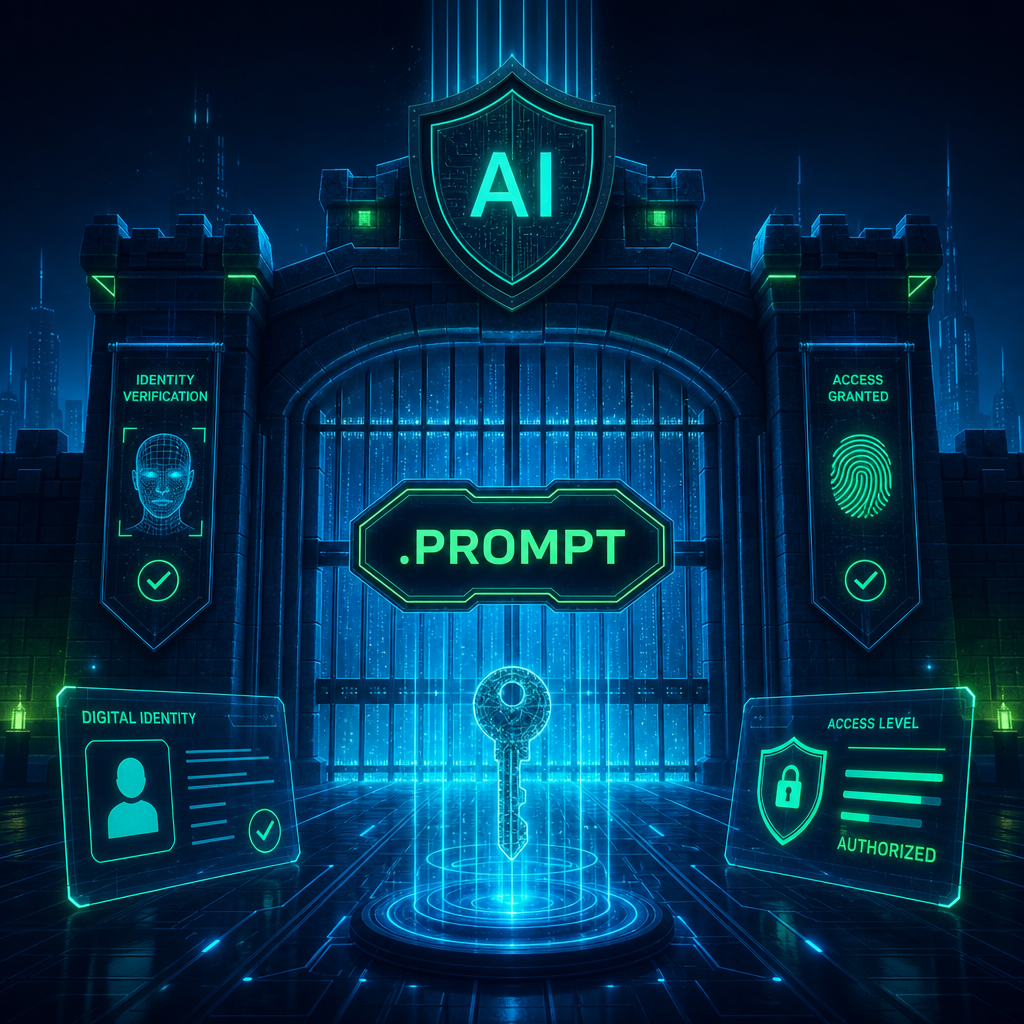
True AI cybersecurity requires more than access lists. It demands verifiable identities, transparent audit trails, and a framework where trust is earned and maintained, not assigned by a government letter.
What This Means for AI Builders
If you are building AI tools, developing models, or working as a prompt engineer, today’s news changes your landscape.
The era of open, unrestricted access to frontier models is ending. The new reality involves government approval, export controls, and curated access programs. Your ability to innovate now depends, in part, on your perceived trustworthiness in the eyes of regulators.
This makes one thing critical: your digital identity.
When access is gated, reputation matters. When trust is the currency, how you present yourself online determines whether you are seen as a legitimate builder or an unknown risk.
Establishing Trust in the Age of AI Gatekeeping
As the AI world grapples with access control and government gatekeeping, having a distinct, credible digital presence is no longer optional. It is foundational.
A .PROMPT domain signals exactly what you do. It identifies you as part of the AI ecosystem. It tells regulators, collaborators, and customers that you are building with purpose and transparency.
In an era where the government is deciding who gets to touch the most powerful AI models, establishing a verified, trusted digital identity is how you ensure you are not left outside the gate.
The Path Forward
The question is no longer whether frontier AI will be regulated. It is already happening.
The question is whether the AI community will build its own standards of trust and identity, or leave it entirely to government lists and export orders.
The builders who thrive in this new era will be those who combine technical excellence with clear, verifiable identity. They will be the ones who can demonstrate trustworthiness, not just claim it.
Secure your AI identity with a .PROMPT domain at promptdomains.ai
Source: Reuters. US allows Anthropic to release Mythos AI to ‘trusted’ US organizations, June 26, 2026
Leave a Reply