
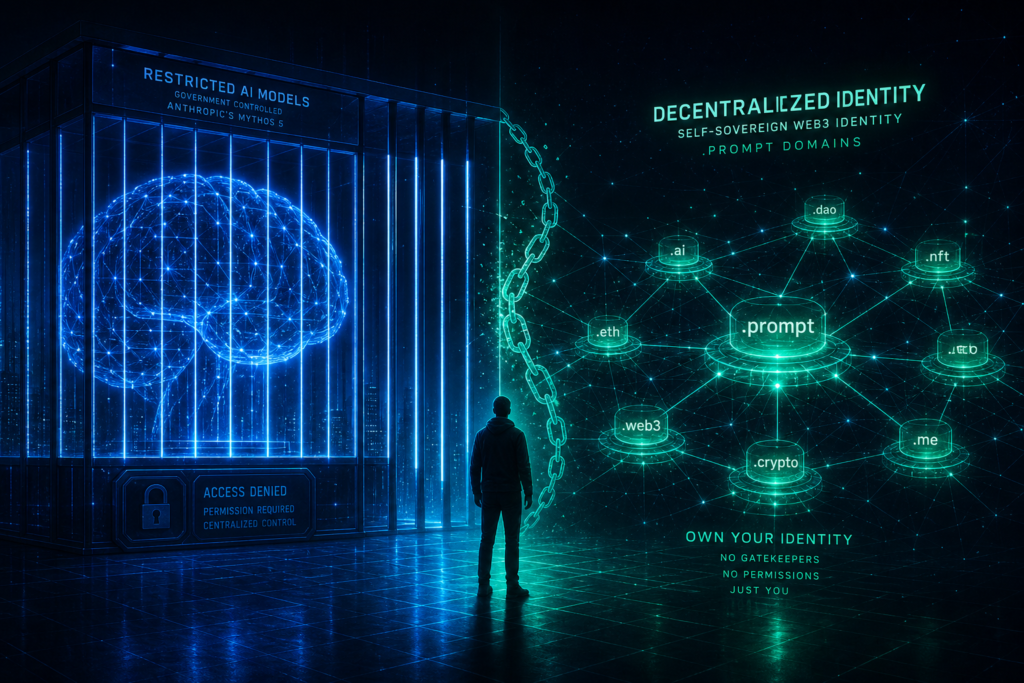
The most powerful cybersecurity tools on the planet just became the most restricted.
Two weeks ago, the U.S. government invoked export control authorities to shut down both Anthropic’s Mythos 5 and Fable 5 models. The reason: national security. Yesterday, the Commerce Department reversed course on Mythos 5, granting access to exactly 100 vetted organizations for defensive cybersecurity operations. Fable 5 remains offline. Meanwhile, OpenAI’s GPT-5.6 Sol/Terra/Luna is rolling out under similar government-mandated restrictions, with staggered access to select partners.
The contradiction is hard to ignore. The same AI models that can scan infrastructure and identify thousands of cyber vulnerabilities in real time are now locked behind the most centralized gatekeeping mechanism the tech industry has ever seen.
Source: Based on reporting from NBC News (June 26, 2026) and confirmed by statements from Commerce Secretary Howard Lutnick, who stated "appropriate guardrails are in place" for Mythos 5’s limited deployment. Additional reporting from Semafor and Axios confirmed that Anthropic’s Fable 5 model is on track for a separate, delayed return.
,
The Gatekeeping Paradox
The core problem isn’t technical. It’s identity.
The U.S. government decided that 100 organizations are "trusted" enough to deploy Mythos 5 for defensive operations. But how was that trust determined? Through existing government relationships, existing contracts, existing bureaucratic pipelines. In other words: centralized gatekeeping dressed up as security policy.
For a decentralized ecosystem that prides itself on permissionless access, this creates a fundamental tension. If the most advanced AI models are controlled by a centralized authority that decides who is trusted and who is not, the entire promise of open AI development begins to erode.
The implications extend far beyond Mythos 5. As models become more capable, the "trusted org" list will only shrink. Access will narrow. The gate will close tighter.
,
The Identity Crisis AI Regulation Is Creating
Right now, "trusted" means whoever the government has on file. For the AI developer community, that’s a problem.
Prompt engineers, independent researchers, small AI startups, and decentralized organizations don’t fit neatly into centralized trust models. They aren’t government contractors. They don’t have legacy relationships with Commerce Department officials. And yet, many of them are building the very tools and frameworks that make AI ecosystems functional.
The Mythos 5 decision exposes a structural flaw in how we think about AI governance: trust cannot scale through centralized databases.
What if there was a way to verify identity, organization, and authorization on-chain? A self-sovereign system where trust isn’t granted by a government gatekeeper but cryptographically proven by the user themselves.
This is where Web3 identity solutions enter the conversation.
,
Web3 Identity: The Decentralized Alternative
Decentralized identity protocols already exist. Verifiable credentials, on-chain attestations, and decentralized identifiers (DIDs) are maturing fast. The missing piece has always been adoption.
The Mythos 5 crackdown changes the math.
When governments start limiting access to the most powerful AI models based on centralized trust lists, the demand for alternative identity frameworks becomes urgent. Web3 domains provide a critical layer: a verified, on-chain proof of who you are, what organization you represent, and what you’re authorized to access.
Unlike centralized registries, on-chain identity is portable, verifiable, and censorship-resistant. You don’t need government approval to prove you exist. You don’t need legacy contracts to demonstrate legitimacy.
The infrastructure is there. The use case just became obvious.
,
Where Dot Prompt Fits
As AI models become more powerful, the gatekeeping will only intensify. The next frontier isn’t just about who builds the models. It’s about who gets to use them.
Dot Prompt domains (.prompt) provide a verified Web3 identity that works across AI platforms, dApps, and the decentralized web. Your .prompt domain isn’t just a URL. It’s a cryptographic proof of identity in the AI era.
For prompt engineers, AI researchers, and companies building AI products, a .prompt domain signals both expertise and legitimacy. It’s a self-sovereign identity layer that operates outside centralized trust systems.
The Mythos 5 situation proves that centralized gatekeeping is already here. The question isn’t whether access restrictions will continue. It’s whether you’ll have an identity framework that works when they do.
,
The AI Gate Is Closing
The most powerful AI models in the world are now accessible only to organizations that pass centralized trust checks. Fable 5 is still offline. GPT-5.6 is rolling out in restricted tiers.
The pattern is clear: as AI becomes more capable, access becomes more controlled.
The future of AI identity isn’t about who the government says is trusted. It’s about self-sovereign identity, cryptographically proven and globally verifiable.
Your .prompt domain is your proof of personhood in the AI era.
The AI gate is closing. Own your identity before it does.
Get your .prompt domain today at promptdomains.ai
,
SEO Keywords: Anthropic Mythos 5, GPT-5.6 Sol, AI governance, Web3 identity, decentralized domains, AI security, prompt domains, digital identity, self-sovereign identity, verified AI access

Leave a Reply