

The AI arms race has entered a volatile new phase. In Washington D.C., a legal dispute has erupted over Anthropic’s supply chain risk designation, while European regulators find themselves sidelined as the U.S. firm restricts access to its most powerful model yet: Mythos.
The Centralization Trap
As Canadian and European officials scramble for access to “superhacking” models like Mythos, a deeper pattern is emerging. The major AI labs are no longer just building tools; they are building closed-loop supply chains. When a government or a massive corporation designates an AI model as a “risk,” they aren’t just talking about safety. They are talking about control.
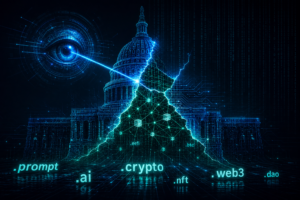
The current dispute in D.C. highlights the messiness of relying on centralized suppliers for mission-critical intelligence. If your business infrastructure is tied to a specific provider’s “risk designation” or geographic restrictions, your sovereignty is at the mercy of their legal team.
The Shift to AI Sovereignty
While the giants fight over valuations and regulatory gatekeeping, the real migration is happening under the surface. Talent is moving from traditional Web3 toward AI, not to build more “crypto,” but to build portable AI identity. The goal is clear: intelligence that you own, on infrastructure that can’t be “nerfed” by a supply chain dispute.
Why .prompt is the Missing Link
This is where the .prompt ecosystem becomes the ultimate hedge. In a world where access to models like Mythos can be restricted overnight, your Prompt Identity is your only true asset. By owning your prompts and your digital identity on a sovereign layer, you ensure that no matter which model is “at risk” or restricted, your business operations remain yours.
The “Mythos” era demands a shift from model-dependence to prompt-independence.
Ready to secure your AI future? Start your free trial with .prompt Domains today and take back control of your digital sovereignty.
Sources: Bitget News, Financial Times, POLITICO.


Leave a Reply