
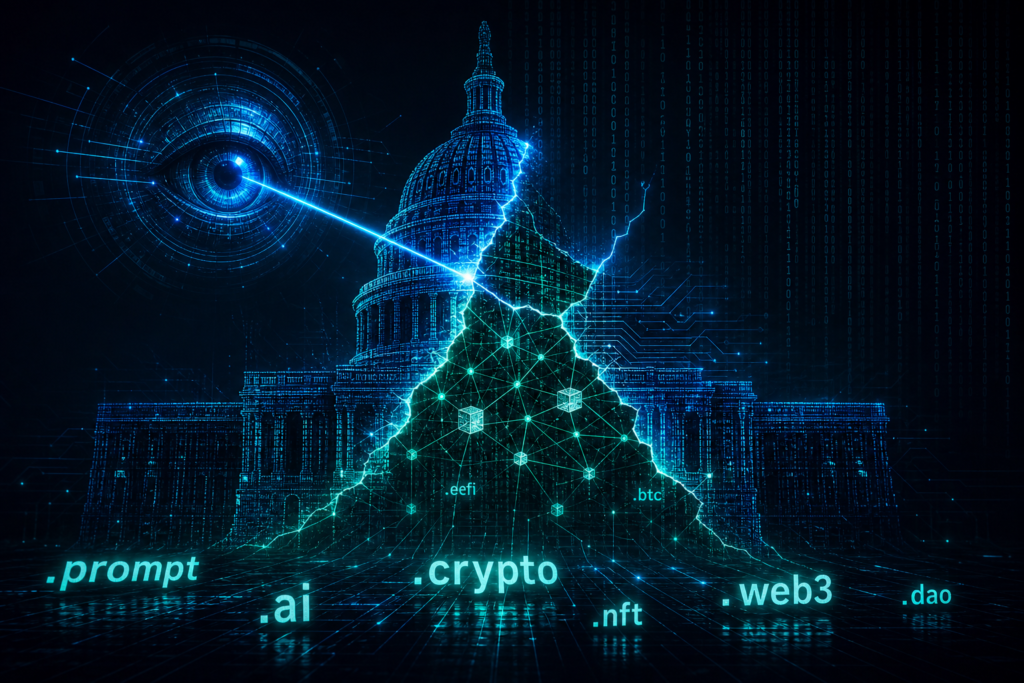
The United States government just admitted something uncomfortable: human expertise alone is no longer enough to secure the software that runs the country.
This isn’t a hypothetical. It’s happening right now.
What Happened
CISA, the Cybersecurity and Infrastructure Security Agency, is using Anthropic’s Mythos AI model to audit federal code repositories. The Attack Surface Evaluation team is scanning over 1,000 open source projects for vulnerabilities. The results so far: Mythos has flagged over 23,000 potential weaknesses. Of the 1,900 findings reviewed, 1,726 have been confirmed. More than 1,000 are rated high or critical severity.
This is code that has been reviewed by human security auditors. Some of these projects have been vetted for years. AI found what they missed.
Why This Matters
This isn’t just a government IT story. It’s a trust story.
Every layer of digital infrastructure, from the firmware on your server to the smart contract on your blockchain, is built on code. We trust that code because someone, somewhere, reviewed it. We trust it because it’s open source. We trust it because it passed a security audit three years ago.
But if the US government’s own cybersecurity agency needs AI to find vulnerabilities that human experts missed in code they’ve been overseeing for decades, what does that say about the software running the decentralized web?
The Irony You Shouldn’t Miss
Here’s the part that should make you pause.
Anthropic, the company behind Mythos, was blacklisted by the Pentagon in February 2026. The reason: Anthropic refused to remove restrictions on autonomous weapons and mass surveillance from its models. The government said no, you won’t build tools for these purposes. Anthropic said fine, then you won’t use our models.
And yet, the NSA had already been using Mythos. Now CISA is using it to scan the nation’s most sensitive code repositories.
The government banned the company. Then the government couldn’t function without its tools.
That’s not a policy story. That’s a dependency story. And it tells you exactly where the power dynamics in AI are heading.
The China Parallel
The same week this news broke, Alibaba banned Claude Code in China. The reason: a dispute over tracking code embedded in the tool. The details matter less than the pattern.
Globally, the tension between AI capability and AI trust is intensifying. Nations are simultaneously deploying AI tools at the highest levels of infrastructure and scrambling to control what those tools can do, who owns them, and what they’re watching.
Trust is no longer a feature. It’s the entire battleground.
What This Means for Web3
Web3 was built on a promise: trustless, verified systems where code is law and transparency is the default. That promise is powerful. It’s also incomplete.
Code is only as trustworthy as the tools that verify it. If human auditors can miss 1,000 critical vulnerabilities in government code, the same is true for DeFi protocols, NFT marketplaces, DAOs, and every other piece of the decentralized stack.
The next phase of Web3 won’t just be about decentralization. It will be about verification. Who audited this code? With what tools? When? By whose standards?
AI-native code auditing isn’t coming. It’s already here. The question is whether the decentralized web will build verification into its infrastructure, or whether it will rely on the same human-limited processes that just failed the US government.
The Identity Layer
There’s another dimension to this that’s easy to overlook.
As AI becomes the primary tool for verifying software, the identity of who wrote, deployed, and audited that code becomes critical. Verifiable, human-owned digital identity isn’t a nice-to-have. It’s the foundation that makes AI-verified trust possible.
This is exactly why .prompt domains exist.
In a world where AI is auditing code, verifying transactions, and flagging vulnerabilities at scale, your digital identity needs to be something you own, something verified, and something that signals your role in the AI ecosystem. A .prompt domain gives you that. It’s not just a name. It’s a verified claim on the decentralized web.
The government just showed us that the future of digital trust runs through AI. The question for every builder, developer, and prompt engineer is simple: does your identity hold up to that standard?
Secure your .prompt domain at promptdomains.ai.
Leave a Reply