
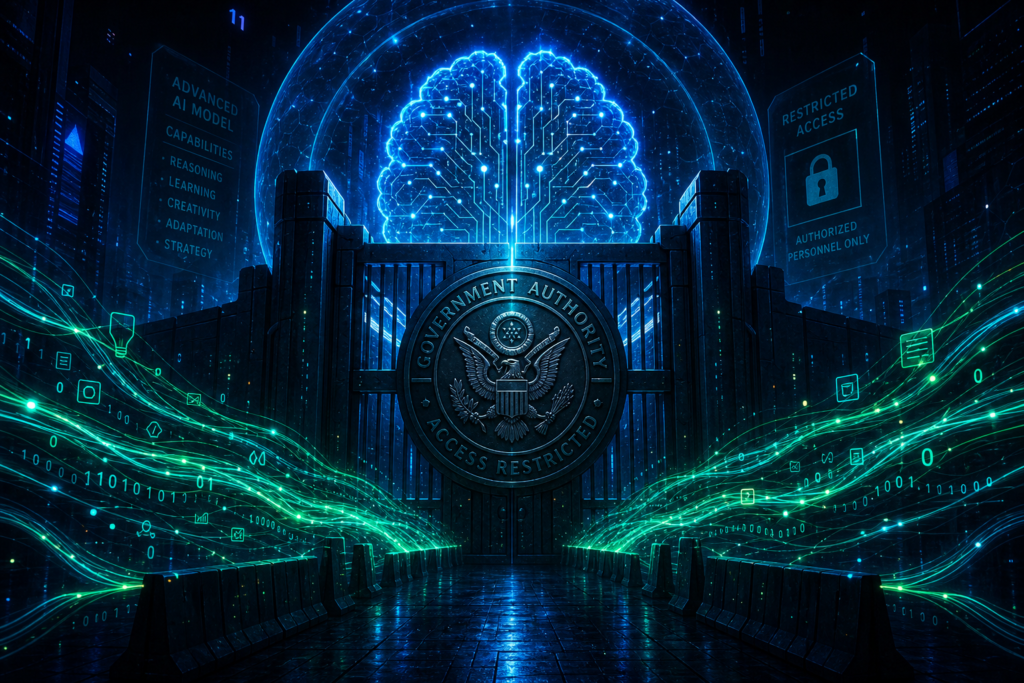
On June 17, 2026, the Trump administration forced Anthropic to restrict foreign access to its most powerful AI models, Fable 5 and Mythos 5, using export controls that effectively shut down international API access overnight.
The decision detonated at the worst possible moment. The G7 summit in France is now consumed by the fallout, with the CEOs of OpenAI, Anthropic, and Google all attending as the debate over AI sovereignty dominates every private session. European leaders arrived unsettled, according to Politico, worried about what one diplomat called a US "kill switch" on critical AI infrastructure.
CNBC reported that Anthropic had spent years publicly advocating for precisely this kind of regulatory framework. They testified before Congress. They published responsible scaling policies. They positioned themselves as the AI company that wanted guardrails.
Now they have them. And they are choking on them.
The Export Controls: What Actually Happened
The mechanism was straightforward but the implications are not. The Commerce Department classified Fable 5 and Mythos 5 as controlled technologies under revised export administration rules, requiring a license for any foreign entity to access the models via API. Anthropic complied immediately, severing access for customers and partners across dozens of countries.
This is not a content moderation decision. It is not a safety pause. It is a government telling a private company which customers it is allowed to serve.
The Wall Street Journal noted that Anthropic scrambled internally to understand the scope of the order before it took effect. Bloomberg reported that several European AI startups that had built entire product stacks on Mythos 5 faced immediate existential risk, with no timeline for resolution.
Financial Times coverage emphasized that the controls apply not just to direct API calls but to any downstream deployment that routes through Anthropic infrastructure. The legal ambiguity around open-source fine-tunes of Fable 5 is still unresolved.
The G7 Fracture
The summit in France was already tense on trade. The Anthropic decision turned it volatile.
European leaders pushed back hard. Politico reported that France and Germany jointly drafted a statement calling the controls "a precedent that undermines the multilateral approach to AI governance we have spent three years building." The statement was softened under pressure from the US delegation, but the rift is real.
Meanwhile, the CEOs sitting across from these leaders face a different calculus. Sam Altman of OpenAI, Dario Amodei of Anthropic, and Google DeepMind’s leadership are all present, and all three understand the same thing: if this precedent holds for Anthropic, it holds for them.
The Financial Times captured the central tension. Every frontier AI company now operates under the implicit understanding that the US government can revoke their global reach with an administrative order. This is not a theoretical risk. It happened to the largest responsible AI lab in the country within a single news cycle.
China Seizes the Narrative
Chinese labs moved fast. Fortune reported that shares in Knowledge Atlas Technology, a Chinese AI lab, surged on the news. Chinese state media framed the ban as confirmation that the US uses AI dominance as a geopolitical weapon, not a safety tool.
This is a public relations gift, and Beijing is unwrapping it carefully.
The deeper consequence is structural. Every international developer who was building on Fable 5 or Mythos 5 now has an immediate incentive to evaluate alternatives, and the most frictionless alternatives are open-source models. Chinese labs are openly offering migration support. The US just handed them a recruitment pipeline.
The Real Problem: Dependency Without Identity
Here is what most commentary is missing.
The Anthropic ban is not just a trade policy story. It is a digital identity story.
When your entire AI stack depends on a single provider, and that provider can be ordered by a government to cut you off, you do not have a product strategy. You have a lease that can be revoked.
The developers, tools, and models that survive this era will be the ones that establish independent, verifiable digital identities. Not just a domain name. A trusted, recognized home base that signals legitimacy, persists across infrastructure changes, and belongs to you in a way that an API key never will.
This is exactly why the .PROMPT domain exists.
The .PROMPT top-level domain was built for the AI ecosystem specifically. Every model, tool, and prompt engineer operating under a .PROMPT domain carries a verifiable signal: this is a real entity, operating in the open, with a stable digital identity that does not depend on any single platform’s continued willingness to serve you.
When governments can shut off model access, when providers can be forced to revoke your API keys, when the infrastructure you built your product on can disappear in a single regulatory action, the question changes. It is no longer just "which model do I use?" It is "where do I exist online, and who controls that?
The .PROMPT domain answers that question definitively.
What Happens Next
The G7 will issue some form of joint statement. It will be carefully worded and strategically vague. Behind closed doors, every allied nation is recalculating its AI dependency on American infrastructure.
Anthropic will fight the controls. They may win partial relief. But the precedent is set. The US government has demonstrated it can and will restrict AI model access as a matter of trade and national security policy.
For the AI community, the lesson is structural, not political. Build on your own foundations. Establish a digital identity that no regulatory body can revoke. Own your presence in the ecosystem in a way that survives the next policy shift.
Your AI brand needs a home that does not depend on anyone else’s permission.
Secure your .PROMPT domain today at promptdomains.ai. Own your digital identity in an era where everything else is negotiable.

Leave a Reply