
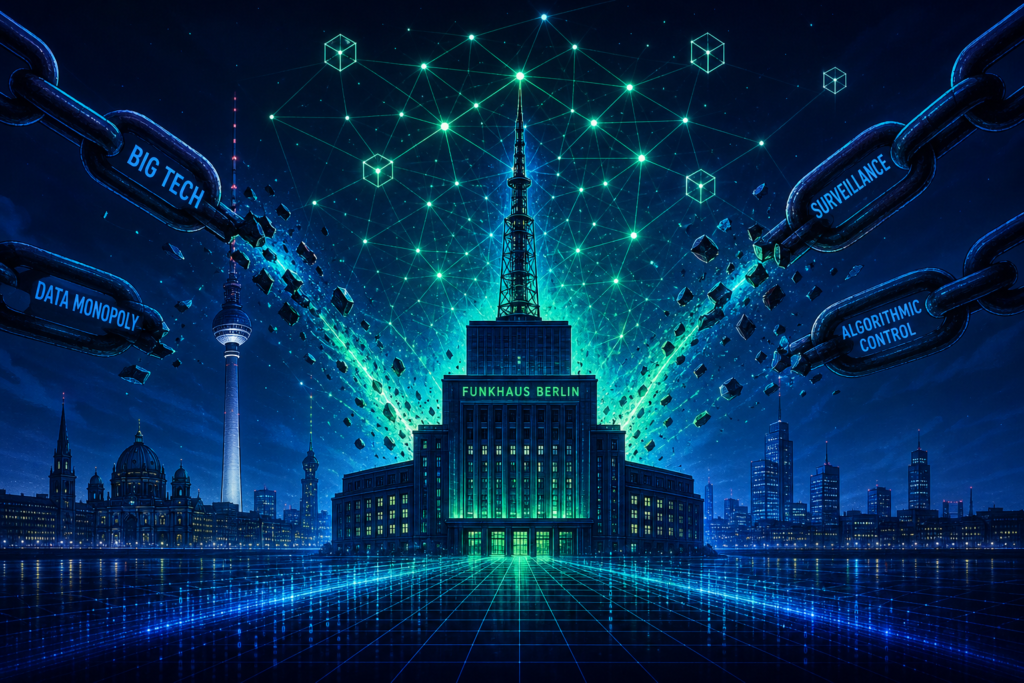
At the 5th Web3 Summit in Berlin’s Funkhaus, the conversation changed. For years, Web3 conferences have been synonymous with token launches and speculative trading. But on June 18-19, 2026, the focus shifted to a more fundamental question: How do we reclaim the internet from the handful of corporations that now own it?
The answer, according to economists, developers, and activists gathered in Berlin, isn’t just about building new blockchains or decentralized applications. It’s about solving a problem that even the most passionate decentralization advocates often overlook: identity infrastructure.
The $162,000 Question
Web3 Foundation Vice President Bill Laboon laid out the staggering cost of the status quo: the average person unknowingly gives away approximately $162,000 worth of data value to tech companies over their lifetime. That’s not a subscription fee. It’s not a service charge. It’s the raw material of your digital life, extracted and monetized without your meaningful consent.
This isn’t just an economic issue. It’s a structural one. The current internet runs on a model where trust is placed entirely in platform intermediaries. You trust Google with your search history. You trust Facebook with your social graph. You trust Apple with your biometrics. In return, they provide services that have become essential to modern life.
Technofeudalism: The New Economic Model
Former Greek Finance Minister Yanis Varoufakis gave this dynamic a name: technofeudalism. In his view, Big Tech platforms have created a new economic order where they function as digital landlords. They own the infrastructure, the app stores, the search engines, the social networks, and everyone else pays rent in the form of data, attention, and engagement.
“The cloud is not a space of freedom,” Varoufakis argued. “It is a space of extraction.”
The blockchain, he suggested, offers an alternative: a way to create infrastructure without a central landlord. But only if we build the right systems on top of it.
Less Trust, More Truth
The summit’s official theme, “less trust, but more truth”, captures the core promise of Web3. Instead of trusting corporations with your data, you verify transactions on a public ledger. Instead of trusting platforms to play fair, you enforce rules through code.
But verification and code aren’t enough. To truly decentralize power, you need to decentralize identity. And this is where most Web3 projects fall short.
Consider the typical decentralized application. To interact with it, you connect a wallet, a long string of alphanumeric characters like 0x7a3b…f29d. For developers, this is manageable. For everyone else, it’s unintelligible.
This isn’t just an inconvenience. It’s a trust problem. If you can’t tell who you’re interacting with on the decentralized web, how do you know you’re not being scammed? If your professional identity is a random wallet address, how do you build reputation? If you can’t signal what you do or what you build, how does the decentralized economy develop specialization and expertise?
The Missing Piece: Human-Readable Identity
A decentralized web needs decentralized identity. Not a string of random wallet addresses, but a name that signals exactly what you do.
This is the gap that .PROMPT domains are designed to fill. A .PROMPT domain isn’t just a web address. It’s a signal of expertise and focus in the AI ecosystem. When a prompt engineer, AI researcher, or tool builder claims a .PROMPT domain, they’re establishing a trusted, human-readable identity in the decentralized space.
Consider the difference: instead of interacting with wallet 0x7a3b…f29d, you interact with yourname.prompt. Instead of trying to explain your work with a bio that may or may not be verified, your domain name says exactly what you do. It’s identity as infrastructure, a foundational layer that makes the rest of the decentralized web more usable, more trustworthy, and more human.
From Berlin to the Future
The Web3 Summit in Berlin made one thing clear: the movement to reclaim the internet from Big Tech is gaining momentum. Joshua Davila, The Blockchain Socialist, demonstrated practical models for cooperative ownership of digital infrastructure. Developers showcased tools that give users control over their data. Economists laid out the theoretical frameworks for a post-platform economy.
But all of these advances depend on a basic building block that’s often missing: a way for people and projects to establish trusted, recognizable identities in the decentralized world.
The.PROMPT ecosystem is building that layer. It’s not the entire solution to Web3’s challenges, but it’s a necessary part of it. A decentralized internet without meaningful identity is like a city without addresses, you can build anything, but no one can find it.
The summit’s theme of “less trust, more truth” points toward a future where digital interactions are based on verification rather than platform authority. To get there, we need identity systems that are decentralized, trustworthy, and human-readable. We need names that signal expertise. We need infrastructure that makes the decentralized web accessible to everyone, not just developers.
The Berlin Manifesto, if we can call it that, is simple: the internet belongs to its users. Reclaiming it requires more than just new technology. It requires new identity.
Your digital identity deserves a home that matches your mission. Secure your .PROMPT domain at promptdomains.ai and claim your stake in the decentralized internet.



Leave a Reply