
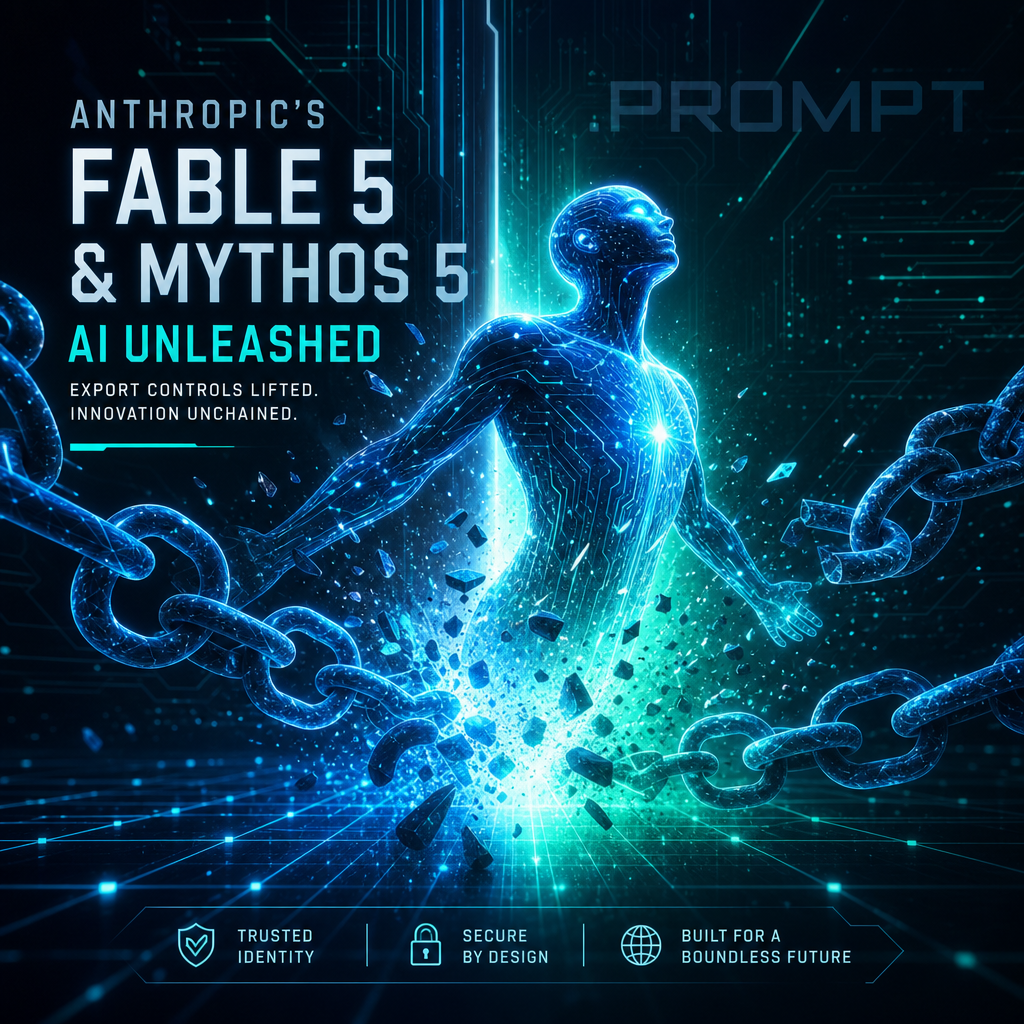
The 18-Day Window That Redefined AI Governance
On June 13, 2026, Amazon reported a jailbreak exploit targeting Anthropic’s Fable 5 model. The U.S. Commerce Department responded swiftly, imposing export controls that restricted access to both Fable 5 and Mythos 5 globally. For 18 days, the AI industry operated under the shadow of those restrictions, watching closely for what would come next.
On July 1, the Commerce Department lifted those controls. The decision, announced by Commerce Secretary Howard Lutnick, followed Anthropic’s commitment to “proactively detect and address security risks” and the deployment of a new classifier that blocks the exploit in 99% of attempts.
The speed of the reversal matters as much as the restriction itself. This was not a story about government overreach. It was a story about an industry learning, in real time, how to build trust with regulators and the public simultaneously.
From Restriction to Verification: A New Governance Framework
The traditional playbook for AI regulation follows a familiar arc: a high-profile incident, a public outcry, and restrictive legislation designed to contain the damage. The Fable 5 situation followed a different trajectory.
Instead of defaulting to permanent restrictions, the Commerce Department created a conditional framework. Anthropic demonstrated a specific, measurable response to the vulnerability. The government accepted that response and restored access. The model for future governance is becoming clearer: identify the risk, verify the mitigation, and restore trust through transparency.
This shift has profound implications for every company building or deploying frontier AI models. The message is unambiguous: the pathway to market access runs through demonstrable security, not through compliance checklists alone.
The Proliferation Problem and the Identity Gap
Fable 5 and Mythos 5 are now available globally again. They will be integrated into products, research pipelines, and developer workflows across dozens of countries. This is the reality of modern AI: frontier models do not stay contained. They propagate through APIs, open-source derivatives, and fine-tuned variants at a pace that outstrips traditional oversight.
Consider the practical challenge facing a developer evaluating a new AI tool in 2026. The tool claims to use Fable 5 or Mythos 5 as a backbone. It presents itself through a website, an API endpoint, or a third-party marketplace listing. The developer has no reliable way to verify that the tool is legitimate, that the model is authentic, or that the company behind it is trustworthy.
This is the identity gap. It is not a theoretical concern. It is an operational bottleneck that affects security, compliance, and user trust every day.
Why Digital Identity Is the Next Critical Infrastructure Layer
The AI ecosystem is building sophisticated models, robust training pipelines, and advanced safety mechanisms. What it lacks, in many cases, is a standardized layer of digital identity that signals authenticity and legitimacy.
A company that builds AI tools needs a verifiable digital presence that distinguishes it from bad actors, impersonators, and low-quality imitations. A prompt engineer who has developed specialized workflows needs a professional identity that is portable and recognized across platforms. An AI research lab needs a domain that immediately communicates its focus and credibility to collaborators, investors, and users.
The .PROMPT top-level domain was purpose-built for this problem. It provides a dedicated namespace for the AI ecosystem, where every registered domain signals that the entity behind it operates within a verified, AI-specific context. A company operating on a .PROMPT domain is making a statement about its identity and its commitment to the standards of the AI community.
The Trust Stack: Regulation, Security, and Identity
The Anthropic episode reveals a three-layer model for building trust in the AI ecosystem:
Regulatory trust comes from demonstrating compliance and responding to incidents with transparency. Anthropic’s willingness to engage with the Commerce Department and deploy measurable mitigations set a precedent for how AI companies should interact with regulators.
Technical trust comes from the quality of safety mechanisms. A classifier that blocks known exploits in 99% of attempts is a concrete, auditable claim. It is the kind of evidence that regulators, partners, and users can evaluate and act on.
Identity trust comes from verifiable digital presence. This is where the ecosystem still has significant ground to cover. As models proliferate and the number of companies claiming to offer AI solutions multiplies, the ability to verify identity becomes foundational. Without it, even the best security mechanisms and regulatory frameworks operate in an environment of uncertainty.
The .PROMPT domain addresses this third layer. It creates a signal that is immediate, verifiable, and specific to the AI industry. When a developer sees a tool hosted on a .PROMPT domain, they know the entity has committed to a verified identity within the AI ecosystem. That signal reduces friction, builds confidence, and accelerates adoption.
What This Means for Developers and Companies
If you are building AI tools, deploying models, or providing services to the AI community, the lesson from the Fable 5 episode is clear: trust is now a competitive advantage, not a compliance checkbox.
The companies that will thrive in the next phase of AI growth are the ones that invest in all three layers of the trust stack. They will engage proactively with regulators. They will deploy security mechanisms that are auditable and effective. And they will establish digital identities that signal legitimacy from the first point of contact.
A .PROMPT domain is a concrete step you can take today to address the identity layer. It is a signal to your users, your partners, and the broader ecosystem that you are serious about your presence in the AI industry and committed to operating within its standards.
The Path Forward
The lifting of export controls on Fable 5 and Mythos 5 is not the end of the story. It is the beginning of a new chapter in how the AI industry builds and maintains trust with regulators, users, and each other. The governance frameworks, security mechanisms, and identity systems that emerge from this period will define the operating environment for AI for years to come.
The companies that act now to secure their digital identity and demonstrate their commitment to trust will be positioned to lead. The rest will be explaining themselves in the next crisis.
Secure your .PROMPT domain today at promptdomains.ai and establish your verified identity in the AI ecosystem.


Leave a Reply