
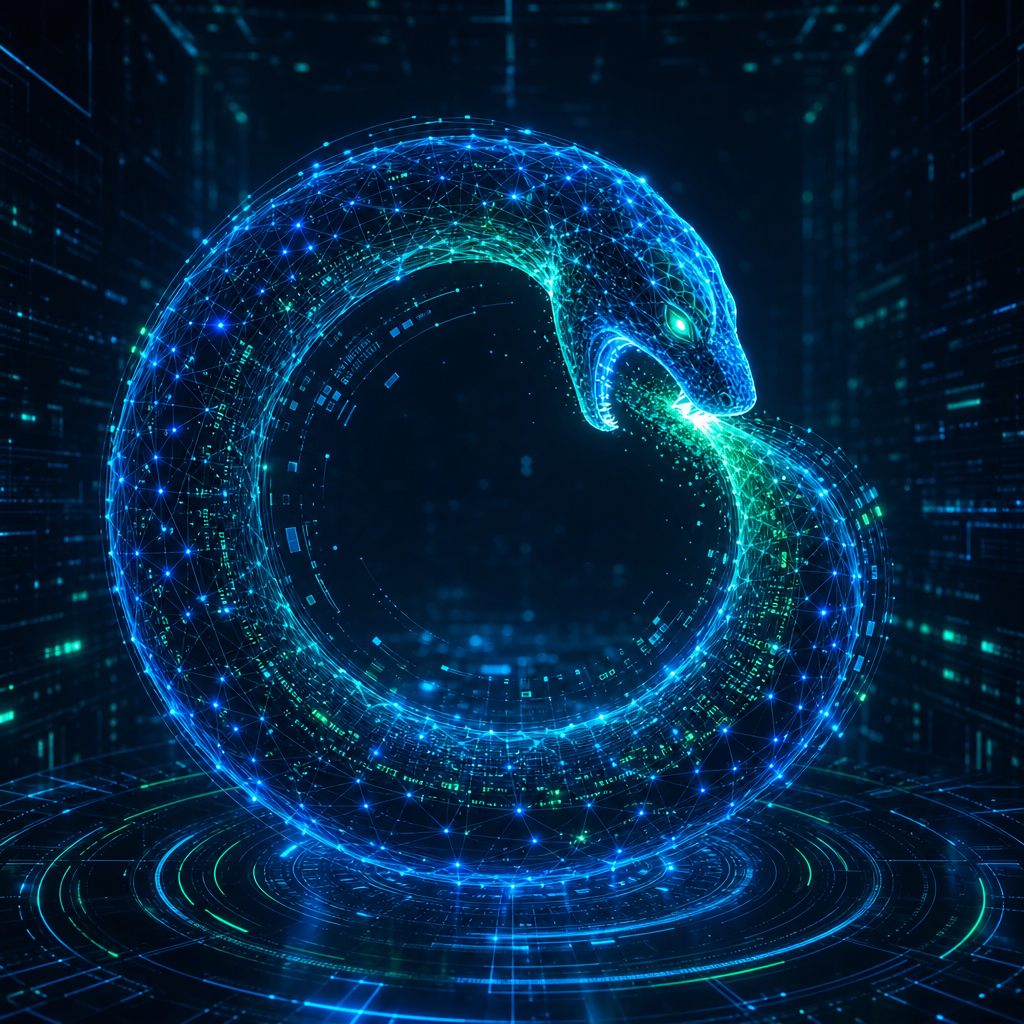
If you thought AI was just a tool for drafting emails and generating images, think again. In a groundbreaking blog post titled "When AI builds itself," Anthropic revealed that as of May 2026, Claude now authors more than 80% of the code merged into its production codebase. This is not a lab experiment. This is the default operating mode at one of the world’s leading AI labs.
The milestone represents a paradigm shift. Anthropic engineers ship eight times more code per quarter than they did in 2024, thanks to Claude’s ability to handle complex programming tasks that once required hours of human effort. Claude Opus 4.6 can complete assignments that would take a human developer 12 hours. Meanwhile, Claude Mythos Preview achieved a staggering 52x speedup on AI training optimization tasks, versus just 3x a year earlier. And in a display of meticulous oversight, Claude caught roughly one-third of all bugs that human engineers missed.
But the most jaw-dropping implication is what Anthropic calls "recursive self-improvement." In their paper, the company suggests that AI’s ability to improve itself could arrive sooner than anyone expected. When an AI system can autonomously optimize the AI training process, it creates a feedback loop that accelerates progress exponentially. The same technology that writes 80% of today’s code could soon write 100%, and the next generation of AI could be entirely designed by its predecessor.
This prospect has Anthropic itself urging caution. The company is calling for coordinated industry options to pause or slow frontier development if risks become unmanageable. It’s a rare moment of self-restraint from a company that just proved its own technology can outpace human output by orders of magnitude.
The implications cascade beyond Anthropic’s walls. When AI autonomously generates and merges code at this scale, how do you verify which code is trustworthy? How do you ensure that the AI building itself hasn’t introduced subtle vulnerabilities? How do you maintain accountability when the engineer is a model?
These questions point to a growing need for digital identity and provenance in the AI ecosystem. If Claude is writing the majority of a codebase, we need a way to tag, verify, and trace AI-generated contributions. That’s where the .PROMPT domain comes in. As AI tools, models, and agents proliferate, having a clear, verifiable identity for each one becomes essential. A .PROMPT domain provides a canonical naming space for AI systems, prompt engineers, and tools. It lets anyone confirm that a piece of code, a model output, or an agent action truly came from the claimed source.
This is not just about branding. It’s about trust in an era where the line between human and machine contribution is blurring faster than regulators can keep up. Whether you’re building AI agents, training models, or deploying prompt chains, a .PROMPT domain gives you a verifiable anchor in a sea of autonomous output.
Anthropic’s announcement marks a pivotal moment in AI history. We are crossing the threshold from AI as a helper to AI as a creator. The next few years will determine whether we manage this transition responsibly. One thing is clear: as AI builds itself, we need to know who built what. That’s the promise of the .PROMPT domain.
If you’re building the next generation of AI tools, models, or prompt systems, secure your digital identity now. Visit promptdomains.ai and claim your .PROMPT domain today.

Leave a Reply