
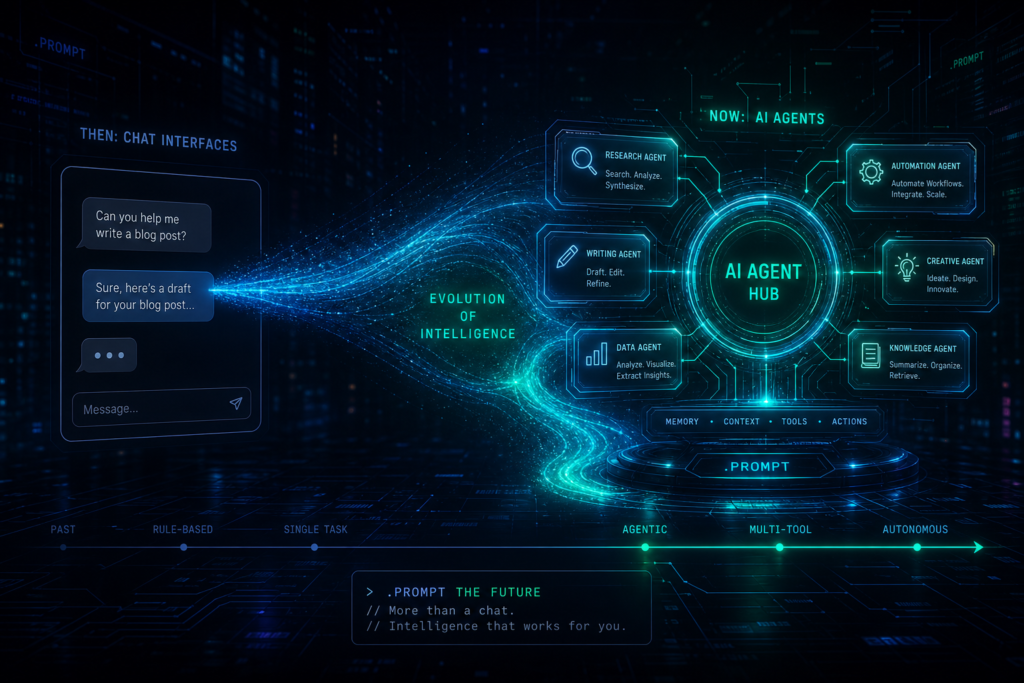
A senior OpenAI employee recently told the Financial Times something that should stop every founder, developer, and investor in their tracks: "Chat is dead."
Not dying. Not evolving. Dead.
The remark, reported in a detailed FT investigation into OpenAI’s restructuring plans, signals the end of the conversational AI paradigm that defined the last three years. What’s replacing it is something far more ambitious, far more complex, and far more consequential for the entire AI industry.
The Biggest ChatGPT Overhaul Since Launch
OpenAI is rebuilding ChatGPT from the ground up. The plan, which merges the chatbot with its autonomous coding tool Codex and layers on partner integrations, transforms ChatGPT from a question-and-answer interface into what the company internally calls a "superapp."
This is not a feature update. This is a structural rewrite of how OpenAI’s flagship product works, who it serves, and what it actually does.
According to reporting by The Decoder and the Financial Times, the new ChatGPT will operate less like a chatbot and more like an operating system for AI agents. Users will not just ask questions and receive text. They will assign tasks, delegate workflows, and let autonomous agents execute multi-step processes across third-party applications.
Think about what that means in concrete terms. Today, you ask ChatGPT to write an email draft. Tomorrow, you tell it to draft the email, send it, schedule the follow-up meeting, update your CRM, and notify your team. The model does not just generate content. It takes actions.
Why This Changes Everything for AI Infrastructure
The shift from passive Q&A to autonomous task execution is not incremental. It is a phase change.
When ChatGPT launched in November 2022, it proved that large language models could hold coherent, useful conversations at scale. That single product catalyzed a $100 billion+ industry virtually overnight. But the interaction model was always the same: human types prompt, model returns text.
The agent paradigm breaks that model entirely.
In an agent-first world, AI models do not wait for instructions. They plan, execute, and adapt. They connect to databases, APIs, payment systems, and communication tools. They operate continuously, not just when a user is typing.
This creates infrastructure challenges that did not exist twelve months ago:
- Identity and verification: When an AI agent sends an email on your behalf or executes a financial transaction, how does the recipient verify which agent, which model, and which prompt chain produced that action?
- Attribution and traceability: In a world where agents create code, write content, and make decisions autonomously, the prompt that initiated the chain becomes a critical audit artifact.
- Standardization: Every major AI lab is building agent capabilities. OpenAI has Codex. Anthropic has Claude with computer use. Google has Project Mariner. Without a common identity layer, the agent ecosystem fragments into incompatible silos.
This is the infrastructure problem that nobody is talking about while everyone obsesses over model benchmarks.
The Digital Identity Gap in the Agent Era
Here is the uncomfortable truth the AI industry needs to confront: we are building autonomous agents at scale with no standardized way to identify them.
Consider the analog from the early internet. Before DNS and domain names, every server was identified by a raw IP address. The internet worked, but it could not scale for human use. Domain names gave every entity on the network a human-readable, verifiable, owned identity. That single layer of infrastructure unlocked e-commerce, email, and the entire web economy.
The AI agent ecosystem is at exactly that inflection point.
An AI agent that can autonomously execute tasks needs a verifiable identity that travels with it across platforms, services, and interactions. The prompt that powers it needs to be ownable, attributable, and discoverable. The model behind it needs a canonical home that establishes trust.
This is not a theoretical need. It is an immediate, practical problem that every company deploying AI agents will face within the next 12 to 18 months.
.PROMPT: The Identity Layer for AI
Prompt Domains was built precisely for this moment.
The .PROMPT top-level domain provides the definitive digital identity for the AI industry. It is not a novelty or a branding play. It is infrastructure.
With a .PROMPT domain, you get:
- A canonical, owned home for your AI prompts, tools, and agent configurations
- Verifiable identity that signals what a prompt or agent does, who built it, and where to find it
- A namespace that scales as the agent ecosystem grows from thousands to millions to billions of autonomous agents operating across the internet
Prompt engineers building the next generation of agent workflows. AI labs deploying autonomous models at scale. Companies integrating AI agents into critical business processes. All of them need a way to say: this is who we are, this is what we built, and this is how you verify it.
A .PROMPT domain is how you make that statement.
The Window Is Now
OpenAI is not waiting. They are rebuilding their entire product around the agent paradigm ahead of their IPO. Anthropic just filed its S-1. Google is embedding agents across Workspace.
The companies that establish their AI identity now will own the trust layer when autonomous agents become the primary interface between businesses and their customers.
The chat era built the foundation. The agent era will build the economy on top of it.
Claim your piece of that infrastructure today. Visit promptdomains.ai and start your free trial to secure your .PROMPT domain before the agent economy goes live.



Leave a Reply